
A Magnificent Obsession
On selflessness

“He who wishes to secure the good of others has already secured his own.” - Confucius
Many years ago, I stumbled across a novel written in 1929 that had a rather profound impact on me. The novel is about an carefree playboy named Robert Merrick who is saved by a rescue crew after a boating accident. Unfortunately, as a result, the rescuers were unable to save another man experiencing a heart attack at the other end of the lake.
That other man was Dr. Wayne Hudson, a humble and selfless doctor who had devoted his life to helping others. Upon finding out that he was saved at the expense of Dr. Hudson, Merrick seeks to learn more about him, and discovers a secret journal kept by the doctor, where he privately wrote about his practice of carrying out anonymous good deeds for others.
Feeling the weight of being saved from a careless accident while Dr. Hudson perished, Merrick decides to better himself by going to medical school, becoming a doctor, and devoting his life to continuing Dr. Hudson’s life work of anonymously helping others. He sees this as a way to atone for his role in the good doctor’s demise, and set his life on a more meaningful course.
The book, Magnificent Obsession, was written by Lloyd C. Douglas, a former Lutheran Pastor, and was subsequently made into two successful movies of the same name - the first a 1935 film starring Irene Dunne and Robert Taylor, the second a 1954 film starring Jane Wyman and Rock Hudson. Here’s the trailer (a bit melodramatic by today’s standards):
Both films took liberties from the original storyline, as movies often do, and made it into more of a love story. Despite its rather stilted writing style, from the perspective of a modern reader, the book is much more satisfying, and doesn’t lose it’s point by focusing on the much less important love story.
Douglas followed this novel with a prequel, published in 1939, called Dr. Hudson’s Secret Journal, which was made into a television series from 1955-1957. Douglas, who didn’t write books until the age of 50, died in 1951 at the age of 73.
Of course, all of this happened well before I was born, and I had heard of none of this at the time I discovered the novel on a used bookstore shelf.
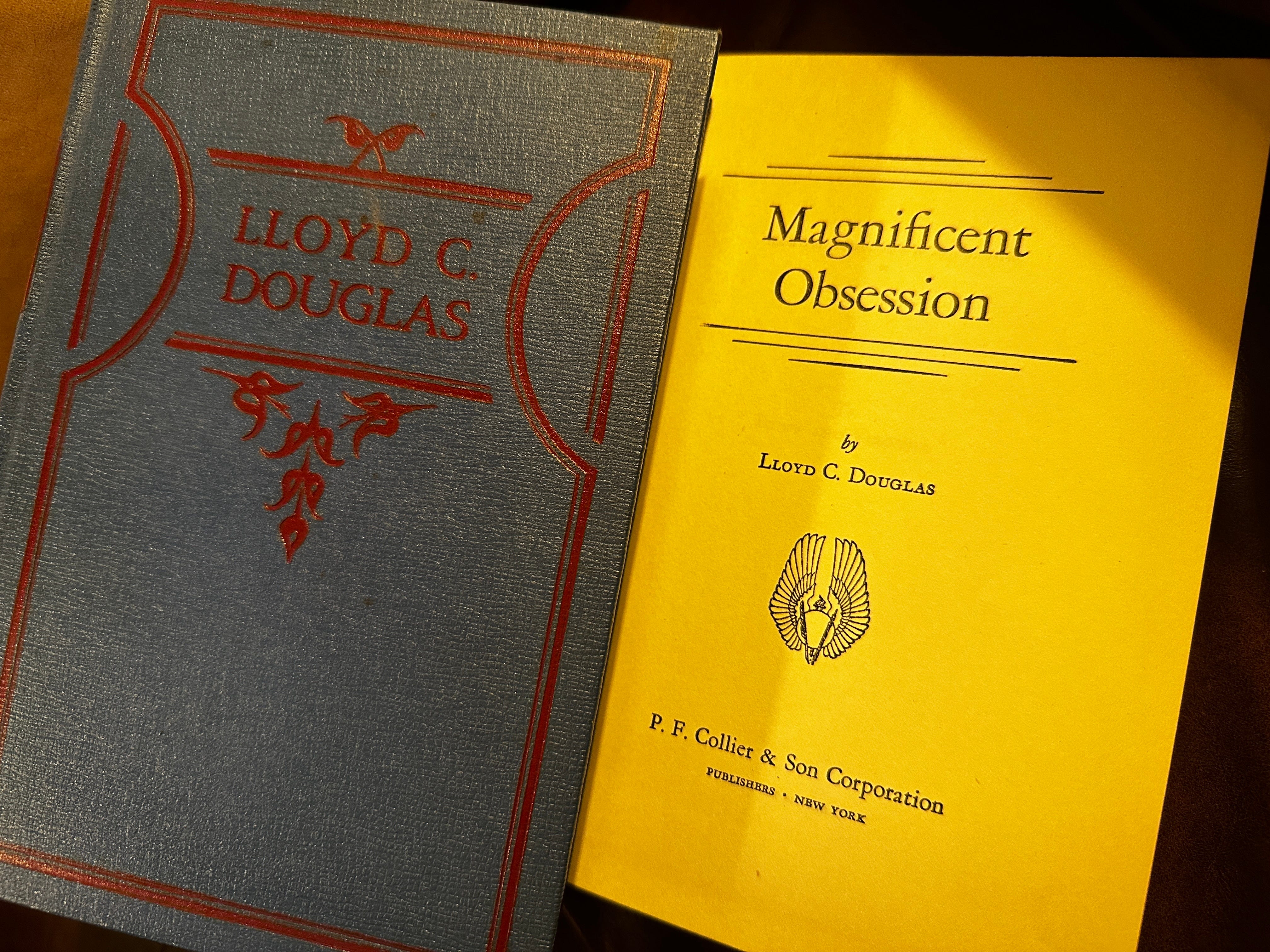
After reading the book, what resonated with me most, was the notion of a person so selfless that he would help another with not only no thought of reward, but with the person who benefited from them not knowing her benefactor. That struck me, and still does, as being incredibly noble.
Douglas reportedly based the novel concept on a passage from the New Testament, specifically Matthew 6:1-4:
6 “Be careful not to practice your righteousness in front of others to be seen by them. If you do, you will have no reward from your Father in heaven.
2 “So when you give to the needy, do not announce it with trumpets, as the hypocrites do in the synagogues and on the streets, to be honored by others. Truly I tell you, they have received their reward in full. 3 But when you give to the needy, do not let your left hand know what your right hand is doing, 4 so that your giving may be in secret. Then your Father, who sees what is done in secret, will reward you.
For me, the “reward in heaven” part diminishes the act, in that there’s still a reward implied. Even the biblical passage supposes that no one would anonymously perform good deeds for others without some promise of reward, even if it’s only in the hereafter. That’s also one of the limitations of the movie adaptations - the character gets his “reward” in love from the object of his affection. And that’s great, but not really the point of giving without expectation of reward.
The point is to do good simply for the sake of doing good. Full stop.
In my life experience, I have witnessed a number of people who seem to me to manifest this quality. They give of themselves quietly, discreetly, and not only seek no reward, but push any thought of recognition away as a meaningless distraction.
That, to me, is a magnificent obsession.
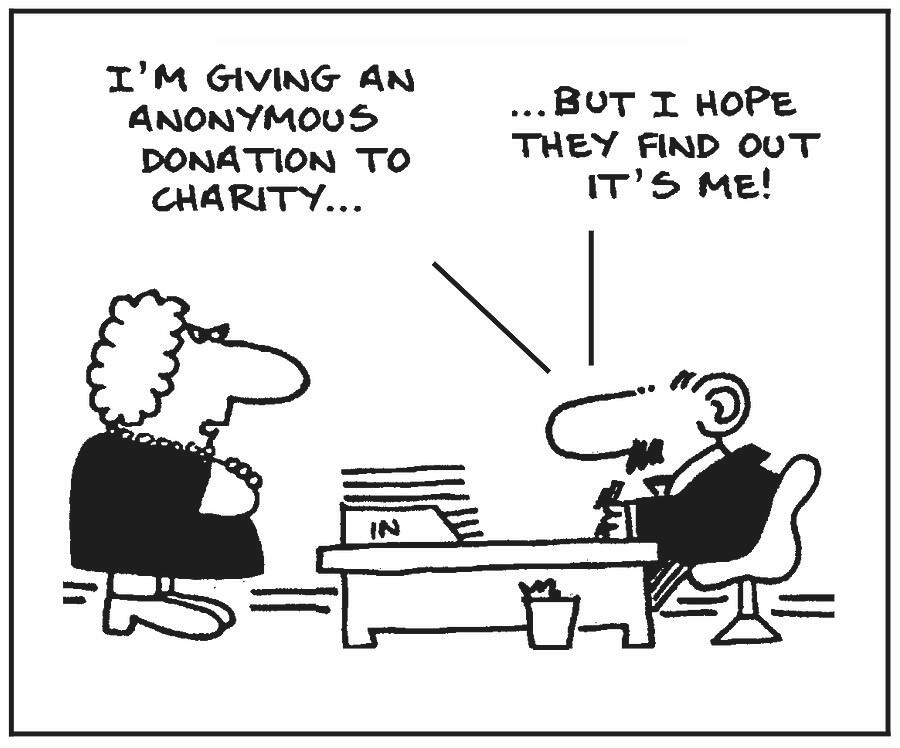
“Yesterday I was clever, so I wanted to change the world. Today I am wise, so I am changing myself.” ― Rumi
Does selflessness still exist?
Why is it such a surprisingly rare thing for a person to care for, support, and help another person, anonymously, with no thought of recognition or reward?
It does seem like a rather rare quality today, in the time of the humble brag, where we seem to witness an epidemic of shameless self-promotion and aggrandizement. For example, I’ve been approached more than once by a marketer wanting me to pay for them to create a Wikipedia page about me. I know this is the age we’re in, but … really? That would be like giving myself a trophy. Or hosting a golf tournament and then magically winning that tournament.
It’s hard to imagine a book like Magnificent Obsession being successful today, in the age of celebrity and social media influencers. The closest I could think of with a similar theme was the book and 2000 film, Pay it Forward, which while noble, still does not fully embrace the aspect of anonymous giving.
How did selflessness become so unpopular?
Honestly, I suspect selflessness is far more prevalent than we realize, and that gives me some degree of comfort in humanity. Truly giving people are quiet, unassuming, and devoted to what they do. They’re not going to brag about it, and we wouldn’t know about their selfless actions unless they did.
An eloquent existential conundrum.
I see many of these people in the helping professions like nursing, social work, or teaching.
"The true test of a man's character is what he does when no one is watching" – John Wooden
A hospice worker who volunteers her time to attend to a mean and cantankerous dying man, mopping his brow and comforting him, staying patient and kind in the midst of his angry outbursts, through to his final moments.
The parents who raise their disabled child at home, integrating that child into their family, exuding love toward that child and modeling selfless devotion for their other children.
A man who rescues two young girls from a burning building, never giving his name or telling anyone, until they all meet fifty years later and discover their connection.
A teacher who quietly spends extra time and attention with a child lacking in a loving home environment, or who comes to school without having been fed.
A doctor who spends her time caring for people she doesn’t know, who suffer from an abnormal brain development that renders them homeless, social outcasts, or criminals, because she feels called to do so.
A nurse who tirelessly spends her days and evenings attending to, listening to, and comforting patients who don’t appreciate her, or who kick and complain and call her names on a daily basis.
I’ll bet you know of some people who fit one or more of these criteria, or perhaps you see yourself in these examples.
If so, I just want to let you know I see you. I know you deflect praise, and that you feel some kind of calling to do what you do. You help make this world a better place, and I appreciate you. I hope you continue to find the strength and sense of purpose that propels you through each day, and helps you to keep going. Because what you do benefits us all, and helps humanity stay human.
Selfless, anonymous, non-reciprocal giving of oneself. What a lovely, admirable, and magnificent obsession.
Thank you.
“It's that wonderful old-fashioned idea that others come first and you come second. This was the whole ethic by which I was brought up. Others matter more than you do, so 'don't fuss, dear; get on with it'.”
― Audrey Hepburn

Great one, Gerg — you pulled the heart of Magnificent Obsession into something real. Made me think of a few folks I know, and a couple we both know, who quietly live that kind of selflessness. Proud of you, little bro!