
Bread and Circuses
On numbing ourselves to real problems

I was chatting with my daughter the other night when she used the phrase, “bread and circuses.” As in, the public is being placated by superficial appeasements to keep us entertained, while other (likely nefarious) stuff is going on. I immediately liked the phrase, but was surprised when I learned it’s been around for millennia, attributed to a Roman satirical poet named Juvenal around the year 100 AD.
(Forgive me for taking a moment to say how proud I am as a dad for hearing expression for the first time from my intelligent 29-year-old daughter and from not some vainglorious curmudgeon. Perhaps the future is brighter than we think!)
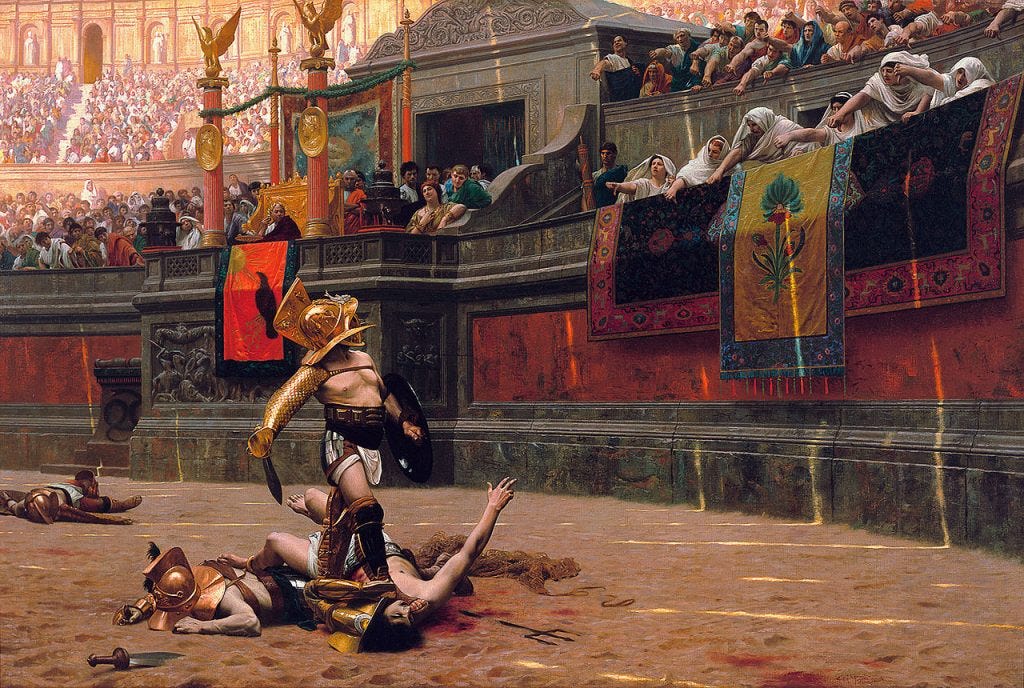
In any event, nearly two thousand years ago, Juvenal wrote of the Roman Empire, “People who once upon a time handed out military command, high civil office, legions — everything, now restrains itself and anxiously hopes for just two things: bread and circuses.” In other words, by placating them with grains and gladiator contests.
So basically, what it refers to is the process of engendering public approval not by doing good and useful things, but by diversion or distraction, designed to offer palliative relief to people to keep them from focusing on more important stuff.
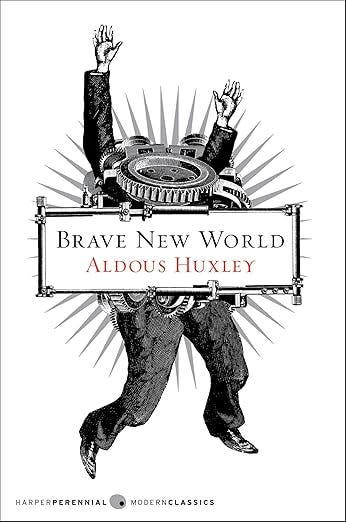
In Aldous Huxley’s classic 1932 novel, Brave New World, the people in his future dystopian world medicate themselves into bliss by taking an numbing medication called Soma, and in the process voluntarily surrender their individuality and abdicate their responsibility as citizens.
Weirdly, in 1959, Wallace Laboratories created the drug Carisoprodol and then marketed the brand name of their habit-forming muscle relaxant as Soma, which works well to anesthetize pain … though also has a high potential for abuse and addiction.
Life imitates art.
To further this topic, in his 1985 book, Amusing Ourselves to Death: Public Discourse in the Age of Show Business, author Neil Postman argued that television had become our modern day Soma (It’s only mildly amusing to realize this book predated the age of the internet and smart phones, which took that drug analogy up several notches). Postman paints a picture of this “television Soma” as de-emphasizing the quality of information in order to meet the more popular needs of entertainment. For example, his book discusses television news where “talking hairdos” blather on about bubblegum topics and cannot be taken seriously. Sound familiar?
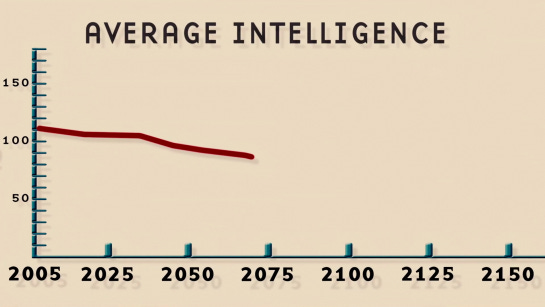
And finally there is the 2006 science fiction comedy film, Idiocracy, starring Luke Wilson and Maya Rudolph. Wilson and Rudolph participate in an experiment where they are cryogenically frozen and wake up 500 years later where, after only the dumbest people have procreated, everyone is astonishingly stupid. Mountains of trash cause an avalanche. Gladiator-style monster truck rallies serve as punishments for criminals. A sport drink company had bought the US Food and Drug Administration and now all crops are dying because they’d forced farms to use their sport drink instead of water. You get the picture. The consequences of hundreds of years of bad decisions results in bad things.
It doesn’t take a genius for the point to sink in.
Of course, we see so many indisputable examples by picking up a newspaper today. Corporations with no accountability and bottomless pocketbooks. Successful vaccine research being undone by wackos with unproven anecdotal theories. Newscasters blathering on about nonsense. Politicians having temper tantrums for clicks and making superficial promises to do meaningless things.
Absurdly, I’m utilizing a medium of thoughts, sentences, and logic here on Substack to convey to other persons who spend their time reading intelligent thoughts, sentences, and logic, rather than dressing up as furries or streaming reality shows like Too Stupid to Die. You, the one reading this, likely understands the concern. You are readers. You are the thought leaders.
Call me Juvenal 2024.
So, smart people … surely, we all see this dangerous trend of heightened stupidity around us every day. More and more people are “calling it in”, not doing any kind of fact-checking, not exercising independent critical thinking, or challenging the most obvious idiocracies of today. My question for you is, how do we turn this ship around?
I’d love to see your comments.
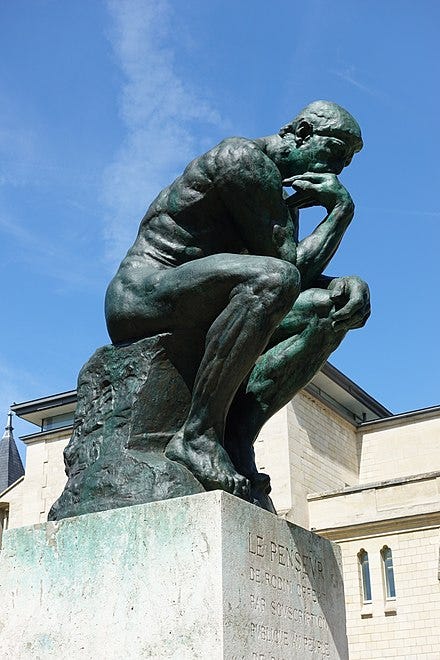
Gerg - to borrow a phrase, ‘It’s a fine mess you got us in this time . . . .”, Gregory.
I instantly pondered my response knowing I had something to say, diving down the black hole to quickly confront the very enigma every great thinker has contemplated since the beginning of time. Like layers of onion, one mystery revealed yet another mystery, ad infinitum, such as (in no particular order) . . . . .
democracy. FOMO. Lemmings. Control. Power. Addiction causality. OCD. Creativity. Adaption. Motivation. Inspiration. Yin Yang. Evolution. Orch OR Theory. Theory of One. The purpose of life. Infinity. Oh, my . . .
I do believe, however, in a nutshell (emph: ‘nut’), individuals must wean off information overload, fake or real, regardless of source, return to center, the now, and use time to discover and express good things that feed body and soul. Tall order to turn this ship around.
As I don't have the required hours/days/weeks to respond as desired, I return to the real problems of life and to check my device for the latest. Numb is as numb does . . .